

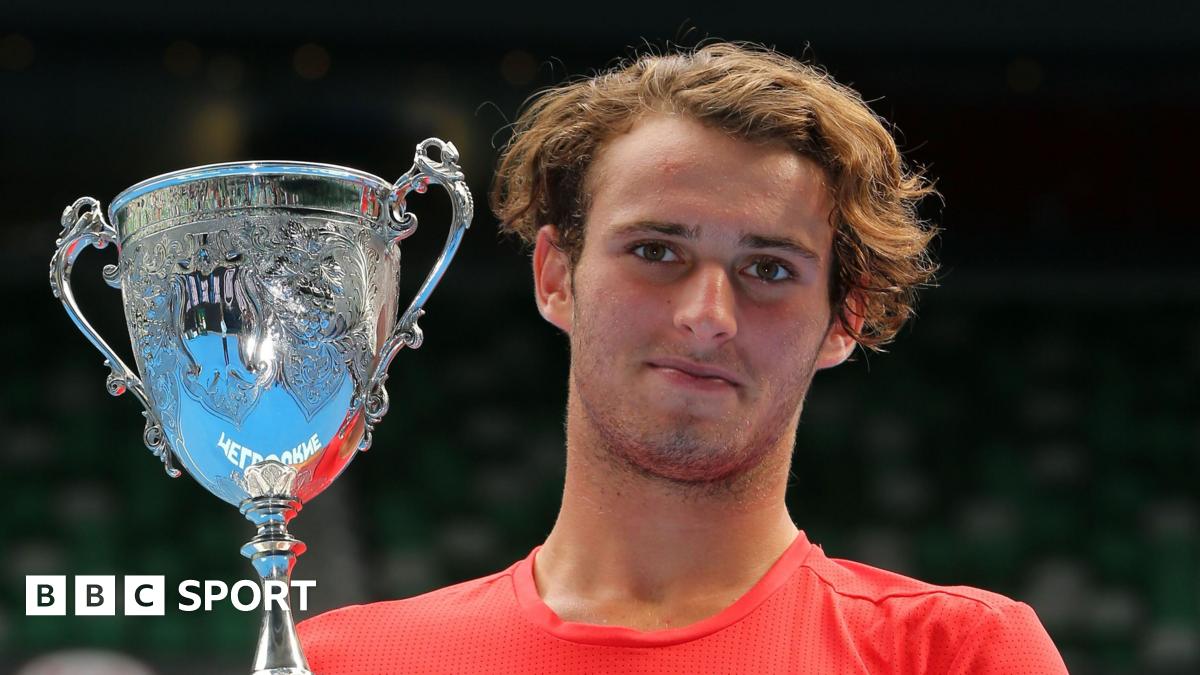
In the high-stakes world of professional tennis, the pressure to perform can be overwhelming, especially for young players trying to make a name for themselves. For Oliver Anderson, a former Australian Open boys' singles champion, the stress of competing at the top level led him down a path of deceit and corruption. In a shocking turn of events, Anderson was caught match-fixing in 2016, a scandal that would change the course of his life forever.
Anderson's rise to fame began in 2016 when he won the Australian Open boys' singles title, defeating some of the sport's future stars, including Stefanos Tsitsipas, Felix Auger-Aliassime, and Alex de Minaur. However, just nine months later, the Brisbane teenager was busted for throwing a set in a Challenger tournament in Traralgon, Australia. The incident would spark a chain reaction of events that would ultimately lead to Anderson's downfall.
Match-Fixing Syndicates Prey on Vulnerable Victims
According to Anderson, he was approached by match-fixing syndicates in the days leading up to the tournament. The syndicates, known for preying on vulnerable victims, sensed an opportunity to exploit the young player's desperation. Anderson, who had been struggling with injuries and financial commitments, saw the offer as a way to escape the pressures of professional tennis. "It all happened very quickly," he recalls. "I was approached, decided it was doable, I'm doing it, then I'm walking off the court and I'm in serious trouble."
The match in question was a three-set comeback win for Anderson, but it was the first set that raised suspicions. Footage of the match shows Anderson hitting loopy, long second serves, followed by casual returns into the net. His opponent, Harrison Lombe, ranked outside the top 1,500, won the first set as planned, before Anderson fought back to win the match. The Australian Broadcasting Corporation reported that a betting company became suspicious when a punter tried to place a large bet on Lombe taking the opener.
Anderson's actions were a cry for help, a desperate attempt to escape the pressures of professional tennis. However, his decision to match-fix would have far-reaching consequences, affecting not only his career but also his personal life.
In the aftermath of the scandal, Anderson was met with undercover police officers, who had been investigating the match-fixing syndicates. "I knew I'd made an absolute blunder," he says. Anderson cooperated fully with the authorities and avoided a conviction, receiving a two-year good behavior bond instead. The incident served as a wake-up call for the young player, forcing him to re-evaluate his priorities and goals.
Today, Anderson is back on the tennis circuit, having rediscovered his passion for the sport. However, his experience has left an indelible mark on his life. "It made me mature very quickly," he reflects. Anderson's story serves as a cautionary tale, highlighting the dangers of match-fixing and the importance of supporting young athletes as they navigate the pressures of professional sports.
The Tennis Integrity Unit (TIU) has implemented various measures to prevent match-fixing, including education programs and increased monitoring of suspicious activity. However, more needs to be done to support vulnerable players and prevent them from being exploited by match-fixing syndicates.
As the tennis world continues to grapple with the issue of match-fixing, Anderson's story serves as a reminder of the importance of protecting young athletes and promoting a culture of integrity in sports. Only by working together can we ensure that the sport we love remains fair, honest, and free from corruption.
Original: BBC Sport
Image: BBC Sport
Written by Npsports

