

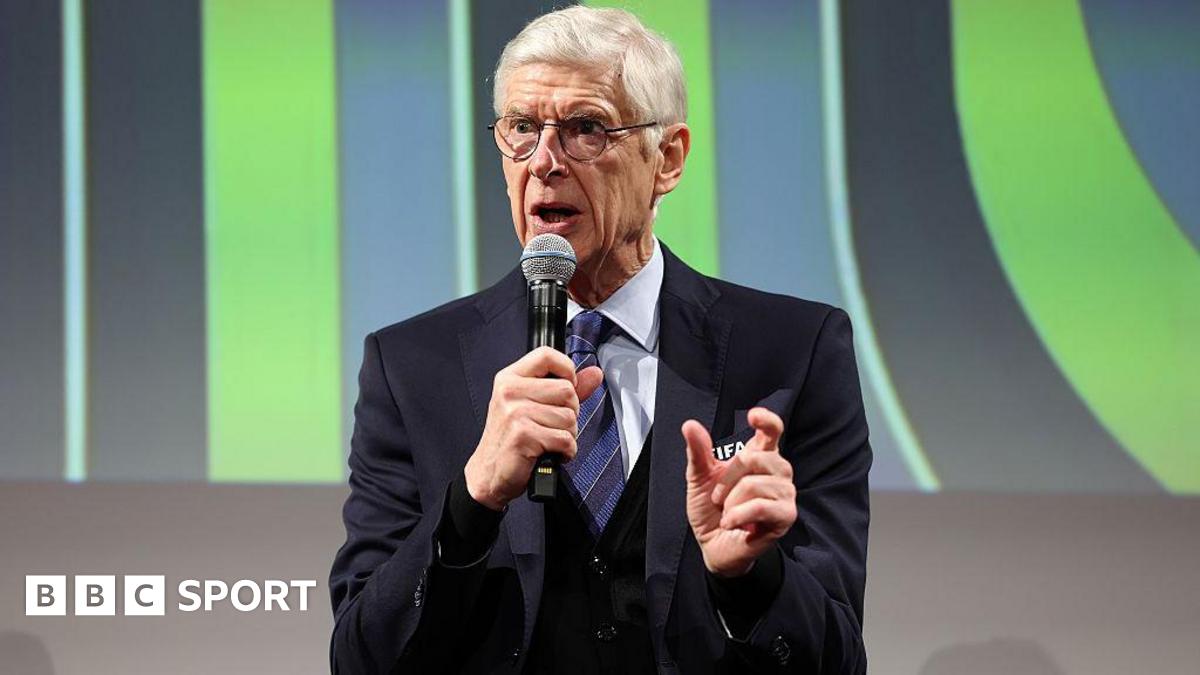
The debate surrounding Arsene Wenger's offside law proposal has been ongoing for six years, with the International Football Association Board (Ifab) set to discuss potential changes for next season. Despite the controversy surrounding "microscopic" VAR decisions, the law remains unchanged since 2020. The question remains: should the fundamental nature of the game be altered due to VAR's influence?
The issue came to the forefront after Coventry's dramatic goal was disallowed in the FA Cup semi-final against Manchester United two years ago. The goal, which would have won the game for Coventry, was ruled out by VAR, sparking a heated debate about the role of technology in the game. However, it is essential to consider whether the very fabric of the game should be changed because of VAR's impact on a small fraction of matches.
Wenger's Proposal: A Solution or a Distraction?
Arsene Wenger, Fifa's chief of global football development, presented his plan to revolutionize offside in 2019. The proposal, known as "visual separation" or "daylight," suggests that a player is not offside if any part of their body is on the same line as the defender. In other words, there needs to be a complete gap between the attacker and the second-to-last opposition player. However, is this proposal a genuine solution to the offside conundrum, or is it a distraction from the real issue at hand?
Offside: A Law That Has Stood the Test of Time
Offside has undergone only two significant changes since the laws of the game were written in 1863. The first change occurred in 1925, and the second in 1990, following a World Cup characterized by defensive football. The 1990 alteration promoted more attacking play while maintaining a fair balance between forwards and defenders. Today, the discussion surrounding offside is not about a shortage of goals but rather the impact of VAR on the game.
The issue is not with the offside law itself, but with the way VAR is interpreting it. The law is clear, but the technology is creating controversy where none exists.
The Impact of VAR on Offside
VAR has brought about a new level of scrutiny to offside decisions, with marginal calls being made with increasing frequency. However, this has also led to controversy, with some decisions being deemed "microscopic." The use of semi-automated offside technology (SAOT) has further exacerbated the issue, with the system producing unpalatable, marginal offside calls. It is essential to consider whether the benefits of SAOT outweigh the drawbacks and whether it is reliable enough to be used as the primary means of determining offside.
The Future of Offside: A VAR Problem or a Wider Issue?
The Wenger proposal forgets that no matter how the law is defined, there will always be a point where a player moves from being onside to offside. VAR will still be required to make marginal decisions, and controversy will inevitably arise. This feels like a VAR problem rather than an issue with the wider game. The question remains: will Wenger's law be approved, and if so, will it bring the clarity and consistency that the game so desperately needs?
Only time will tell if the Ifab will adopt Wenger's proposal or if it will remain a topic of discussion for years to come. One thing is certain, however: the debate surrounding offside will continue to be a contentious issue in the world of football.
Original: BBC Sport
Image: BBC Sport
Written by Npsports

