

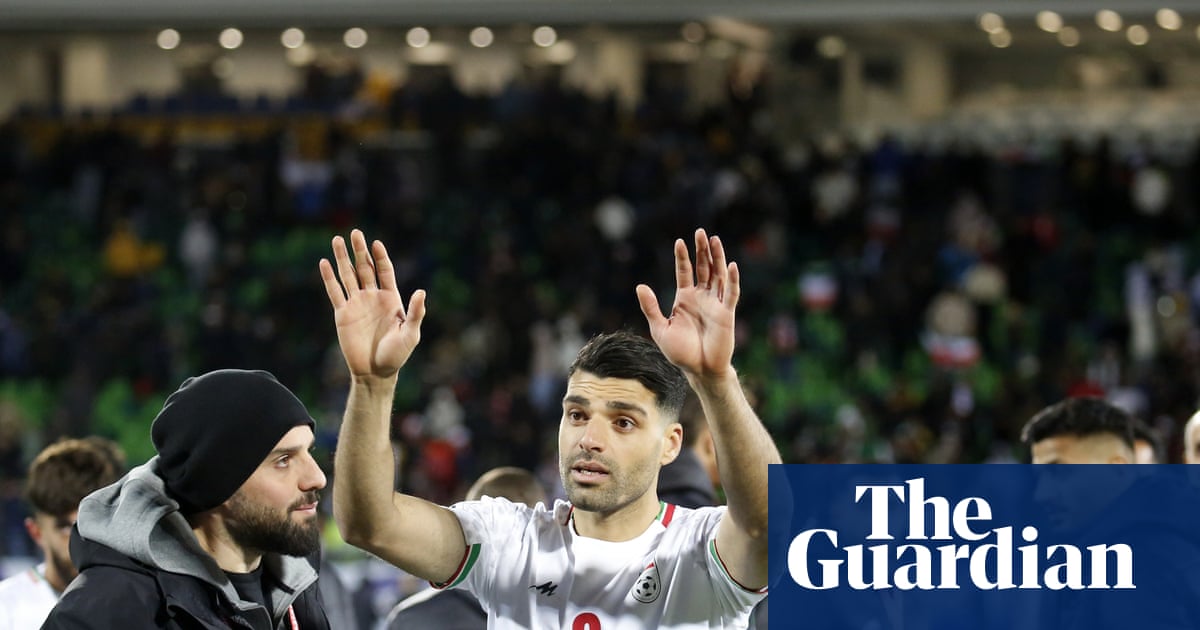
The beautiful game has long been a source of pride and passion for the people of Iran, but as the country teeters on the brink of chaos, its footballers are finding themselves at the forefront of a battle for freedom and expression. Mehdi Taremi, the Iranian striker who has made a name for himself in European football, recently scored a crucial goal for his Greek club Olympiakos, but his celebration was muted, a deliberate act of solidarity with the people of his homeland who are suffering under the regime's brutal crackdown on protests.
The situation in Iran is dire, with surging inflation and a collapsing currency sparking widespread unrest and anti-government protests. The response from the ruling regime has been swift and merciless, with reports of death, repression, and a blanket internet blackout that has left millions of people cut off from the outside world. For those with loved ones inside the country, the fear and worry are palpable, as WhatsApp messages go undelivered, emails are lost in cyberspace, and websites are unreachable.
Football has always occupied a unique place in Iranian culture, with the government walking a fine line between embracing the sport's popularity and fearing its potential to mobilize mass gatherings and spark political unrest.
When Iran qualified for the 1998 World Cup, players were told to delay their return home to allow celebrations to subside, and in a 2010 qualifier, several players wore green armbands in support of opposition leader Mir Hossein Mousavi, highlighting the complex and often fraught relationship between football and politics in the country.
For Iranian footballers, speaking out against the regime is a perilous business. Ali Daei, a cultural icon and former player, backed protests in 2022 and saw his family prevented from leaving the country, while former national team defender Voria Ghafouri was detained for "spreading propaganda against Iran" during the last World Cup. The risks are real, and the consequences can be severe, but some players are refusing to be silenced. Ghafouri, the former captain of Tehran Esteghlal, has reportedly closed his cafes in the capital in solidarity with the protesters, and Taremi has been vocal in his criticism of the regime and its treatment of the Iranian people.
The Iranian football federation has warned of repercussions for players who speak out, with the Fars News Agency threatening that "these unrests will soon come to an end, but the real test for officials of the football federation will begin afterwards, when they must show that calls for chaos will receive a firm response". But Taremi, who has evolved from a supporter of the regime to a vocal critic, may be a harder target to silence. With his international profile and reputation as one of Iran's most successful exports, he may be able to withstand the pressure and continue to speak out against the regime's brutal crackdown on protests.
Football has long been a powerful force for change in Iran, with the sport's massive popularity and reach making it a potential catalyst for mobilization and protest. As the situation in the country continues to deteriorate, the role of footballers like Taremi and Ghafouri will be crucial in bringing attention to the plight of the Iranian people and putting pressure on the regime to reform. Some of the key issues at play include:
As the world watches the situation in Iran unfold, the role of footballers like Taremi and Ghafouri will be crucial in bringing attention to the plight of the Iranian people and putting pressure on the regime to reform. Their bravery and conviction are an inspiration to millions, and a reminder that even in the darkest of times, there is always hope for a better future.
Original: The Guardian
Image: The Guardian
Written by Npsports

